
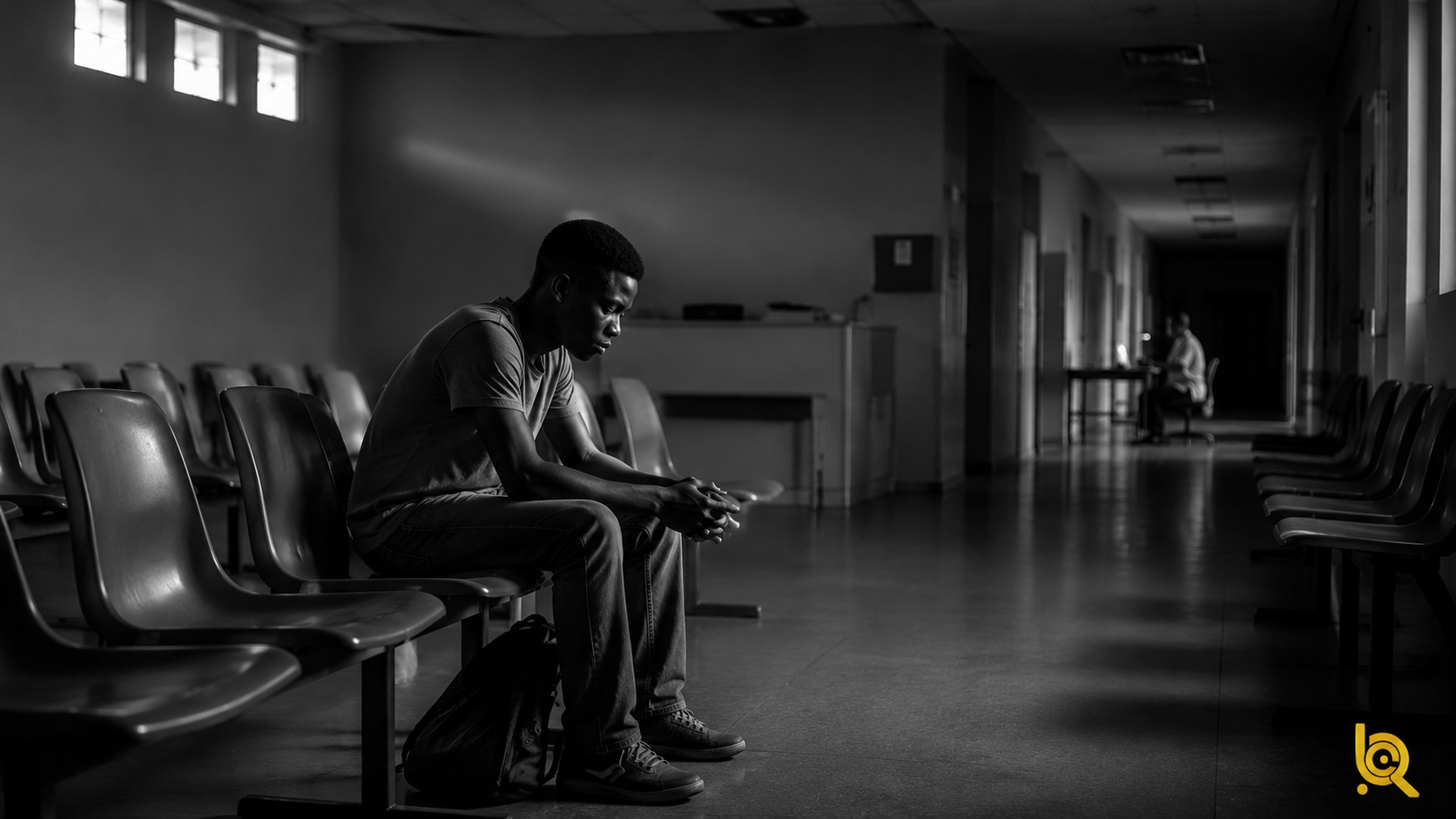
There are crises that arrive with visible drama — a health emergency declared on national television, medicine convoys mobilised, a president addressing the nation. And there are crises that accumulate in silence, in the gap between what people need and what the system can provide, felt in individual households and never quite reaching the threshold of political emergency. Botswana’s mental health landscape is the second kind of crisis: severe, structurally embedded, and almost completely unremarked upon in national policy discourse.
The numbers are not ambiguous. Research conducted at the Botswana-Baylor Children’s Clinical Centre of Excellence — one of the country’s few institutions conducting systematic mental health screening among young people — found suicidal ideation in 29.4 percent of participants, with attempts at 6 percent, and depression in 39.6 percent. These are not marginal findings from a small study. They describe a significant proportion of Botswana’s young people in active psychological distress. Against the infrastructure that exists to receive them, those numbers are a system under impossible pressure.
The Infrastructure That Doesn’t Exist
Botswana has fewer than 0.3 psychiatrists per 100,000 people. It has approximately 1.52 clinical psychologists per 100,000. The country has one dedicated paediatric psychiatric hospital — a 300-bed facility located 80 kilometres from Gaborone. For a country of 2.6 million people, this means that clinical mental health care of any depth is accessible to a vanishingly small fraction of those who need it. The math is not complicated: at 0.3 psychiatrists per 100,000, a country of 2.6 million has roughly 8 psychiatrists practising nationally.
Social workers are more numerous, at 217 per 100,000, and in many communities they function as the first — and only — point of contact for people in mental health distress. But social work training in Botswana, as multiple research collaborations have documented, provides varying levels of preparation for clinical mental health intervention. The Botswana-Baylor and University of Botswana research specifically notes that social workers “have differing levels of comfort with providing therapy, especially to youth.” They are the system’s most available resource and its most undertrained one.
The practical effect of this infrastructure gap is that most Batswana experiencing depression, anxiety, psychosis, or suicidal ideation have no clinical pathway available to them. What exists is informal: family, church, traditional practitioners, and peer networks. Some of this informal support is genuinely valuable. None of it is a substitute for clinical care when the condition is severe, and none of it is systematically connected to the formal health system in a way that identifies risk, tracks outcomes, or builds the knowledge base the country needs to understand the scale of what it is dealing with.
The crisis is not invisible because it does not exist. It is invisible because the system that would make it visible — the clinical infrastructure to diagnose, treat, and count — does not exist at the scale the problem requires.
The Amplifiers
Several forces are actively intensifying the mental health burden in Botswana without any corresponding expansion of the system designed to manage it. Youth unemployment — at 44 percent, among the highest in the world — is a documented risk factor for depression and anxiety at the population level. A generation of young people who have done what they were told to do — completed school, pursued qualifications, applied for jobs — and find themselves with no return on that investment are not experiencing temporary disappointment. They are experiencing a sustained failure of the social contract, and the psychological consequences of that are real and measurable.
Social media has contributed a second amplifier. The same platforms that have democratised access to information and enabled political mobilisation also create a constant comparative pressure — exposure to curated presentations of other people’s apparent success, wealth, and social acceptance, measured against one’s own reality in a challenging domestic economy. Research on social media and mental health is contested at the margins, but the direction of effect for heavy social media use among young people experiencing socioeconomic stress is consistent enough to warrant attention. Botswana’s youth are among the most connected populations in the region. The psychological costs of that connectivity, in a context of high unemployment and limited social support infrastructure, are not being tracked.
A third amplifier is the HIV burden, which disproportionately affects women and has a documented, bidirectional relationship with mental health. HIV prevalence among women in Botswana stands at 26 percent, nearly double the rate among men. The psychological burden of living with HIV, managing antiretroviral treatment, and navigating the stigma that still surrounds the condition in many communities interacts with the existing mental health infrastructure gap in ways that research from Botswana-Baylor and partner institutions continues to document but that policy has not yet systemically responded to.
What a Response Would Require
University of Botswana researchers, working with international partners including through the Botswana-Baylor collaboration, have explored a task-sharing model adapted from Zimbabwe’s Friendship Bench intervention — a programme that trains lay counsellors to provide structured psychological support at community level, under clinical supervision. This kind of model is specifically designed for health systems that cannot afford to build clinical capacity at scale in the short term, redirecting the workforce that exists — community health workers, social workers, peer supporters — toward structured, evidence-based mental health support roles with appropriate training and oversight.
A national mental health policy framework that mandates this kind of community-level infrastructure, connects it to the formal health system, and funds it as a core health system function rather than a pilot programme is the minimum structural response that the scale of the problem warrants. In the wake of the August 2025 medicine shortage, which explicitly included mental health medication in its list of depleted supplies, the case for embedding mental health as a protected, domestically-financed core health priority — not dependent on external aid, not the first thing cut when revenue falls — is not aspirational. It is urgent.
Name It, Fund It, Build It — or Watch the Cost Keep Rising
Botswana’s mental health crisis has not been named because naming it would require confronting the gap between the scale of the need and the scale of the response — a gap so large that it demands investment and institutional change that would have to compete with more politically visible priorities. But crises that are not named do not resolve themselves. They grow. And in a country with 44 percent youth unemployment, rising social media penetration, high HIV burden, and a population whose psychological resilience is being tested by economic conditions that are not going to resolve quickly, the cost of continuing not to name it is rising every year.
Sources: Botswana-Baylor Children’s Clinical Centre of Excellence (PMC/NIH); University of Botswana Department of Social Work; World Health Organization; Al Jazeera; Daily News Botswana; World Bank gender data; DemocracyNext.